Surface chemistry you can document
SLActive hydrophilic titanium claims must map to IFU indication, storage conditions, and biocompatibility ISO 10993 evidence packages.
Dental implants · Digital dentistry
Evaluate Straumann surgical kits, SLActive surface protocols, intraoral scanning, CAD/CAM milling, and prosthetic components against testable clinical, biocompatibility, and interoperability criteria.
Why clinical teams shortlist Straumann
SLActive hydrophilic titanium claims must map to IFU indication, storage conditions, and biocompatibility ISO 10993 evidence packages.
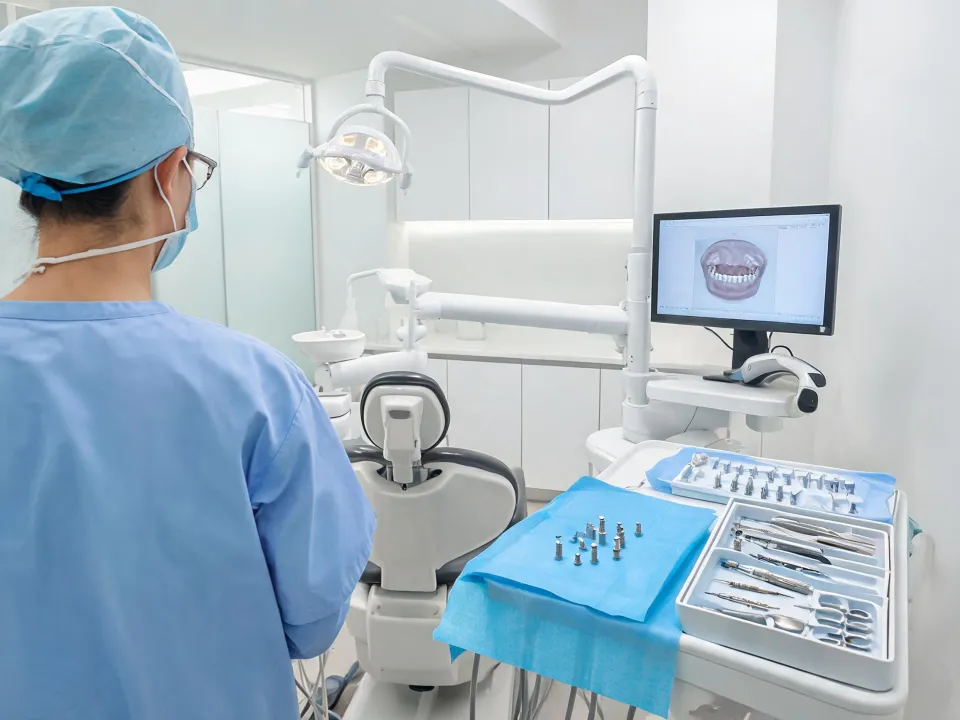
Surgical guide fit, drill stop geometry, and cassette sterilization cycles (steam / EO) belong in the same acceptance packet.
Insertion torque windows and abutment screw preload only help when torque wrench calibration intervals are written down.
Intraoral scan body libraries, CAD/CAM abutment fit, and Ti-base tolerances need version-controlled STL / library releases.
UDI-DI / UDI-PI labeling, GUDID entries, and recall lookup paths stay reference-specific across implant and prosthetic SKUs.
ISO 13485 scope, ISO 14971 risk-benefit analysis, DHF/DMR access, and PMS plans remain part of every clinical evaluation.
Procurement workbench
Figures below are planning ranges for dental implant workflows, not guarantees for every Straumann reference. Confirm IFU, 510(k) / CE MDR labeling, and regional availability.
| Platform fit | Map diameter / length matrix, connection type, and bone quality indication against surgical protocol tables |
|---|---|
| Surface & biocompatibility | SLActive or equivalent hydrophilic claims; ISO 10993 cytotoxicity / sensitization / implantation evidence on file |
| Sterility assurance | SAL 10⁻⁶ packaging under ISO 11607; confirm shelf life and shipping validation for each lot |
| Regulatory path | Confirm FDA 510(k) cleared or CE marked under MDR 2017/745 status by exact catalog reference |
| Cassette layout | BLT / BLX / Standard Plus kit maps; drill stop sequence; torque wrench compatibility |
|---|---|
| Reprocessing | Steam autoclave 121°C / 134°C cycles, EO where labeled, AAMI ST91 documentation on request |
| Guided surgery | Sleeve height, drill length, and guide retention must match the digital plan export version |
| Boundary | Instrument reuse count and wear inspection intervals govern usable kit life independent of implant SKU |
| Scan body library | Version-controlled libraries for RC / NC / SC platforms; digital analog fit checks |
|---|---|
| Intraoral scanner | Accuracy envelope, open STL export, and chairside CAD/CAM handoff latency |
| Interoperability | Practice management export, DICOM CBCT merge where indicated, and cybersecure update path |
| Boundary | Scan quality depends on soft-tissue management, saliva control, and operator training—not scanner model alone |
| Ti-base & abutments | Emergence profile library, screw channel angulation, and milling cutter compatibility |
|---|---|
| Material options | Titanium, zirconia, and hybrid restorative stacks with IFU torque values |
| Lab workflow | CARES scan body / abutment path, closed-tray impression fallback, and lot-level UDI on prosthetic components |
| Boundary | Occlusal load, cement gap, and lab milling accuracy can shift fit independent of implant platform |
Regulatory recognitions
Clearance statements are reference-specific. Request the applicable K-number summary for each implant or instrument family.
EU MDR technical documentation and Notified Body certificates available by market and device class.

Quality management system covering design controls, CAPA, supplier qualification, and complaint handling.

Cytotoxicity, sensitization, irritation, and implantation endpoints maintained in the biological evaluation file.
Bring your care setting, procedure mix, and digital stack. We will map implant platform options, guided surgery kits, and documentation packets—not a one-size brochure.